Understanding IoT Development Boards and Their Capabilities
Key Features to Consider When Selecting a Board
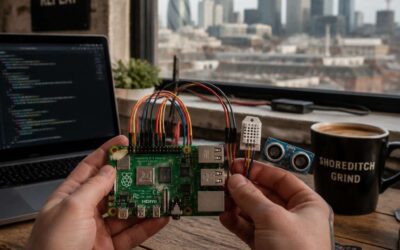
Understanding IoT development boards means looking past the glossy spec sheets and asking what a board actually does when it sits inside a working sensor network. In Mbombela, where heat and humidity test hardware daily, the practical capabilities matter more than the theoretical maximums.
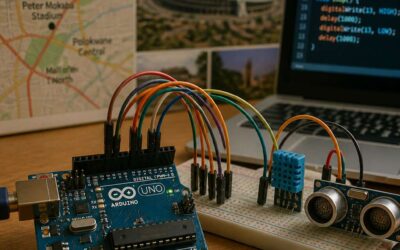
The selection process gets interesting because every project carries its own constraints. You need a board that balances processing power, energy draw, and compatibility with the sensors you already own. Some boards have Wi-Fi and Bluetooth welded into the silicon. Others expect you to attach separate modules, which adds cost and assembly time.
When you compare options, check these specifics:
- GPIO pin count and pin compatibility
- Supported communication protocols
- Operating temperature range
- Community documentation quality
IoT development boards Mbombela suppliers keep different stock, so local availability should shape your decision. A board that takes a month to ship can stall your entire deployment before it starts.
Comparing Popular Board Architectures
A processor core can complete millions of operations while a single radio packet waits for attention. That mismatch defines architecture. In Mbombela, IoT development boards Mbombela must survive afternoon heat spikes and thunderstorms. The processor might be fast on paper, but the radio’s behaviour under interference, the sleep current after a failed transmission, and the recovery time after an unexpected reboot decide whether your network survives the season.
Comparing popular architectures means understanding trade-offs:
- Single-chip SoCs integrate radio and CPU, reducing failure points
- Modular systems allow sensor-specific expansion but add assembly complexity
- Hard real-time designs deliver deterministic response for industrial control
I have watched deployments stall on hardware that looked perfect on paper. IoT development boards Mbombela operators choose today must balance architecture against maintenance burdens. A board that cannot wake from sleep will drain batteries regardless of core clock. The architecture defines the constraints you accept before deployment.
Power Management and Battery Life Essentials
A CR2032 coin cell stores 225 milliampere hours. A board drawing 30 milliamperes per transmission exhausts that cell in eight hours of continuous use. Sleep current changes the equation. Drop to 3 microamperes in standby, and the same board samples sensors for years!
Power management on IoT development boards Mbombela demands attention to the radio transceiver, the voltage regulator, and the sensor bus. Each component drains energy differently. Mbombela’s heat accelerates battery self discharge, so efficiency becomes doubly important.
Common power states include:
- Active mode with radio on, drawing 20 to 40 milliamperes
- Sleep mode with timers running, drawing 5 to 10 microamperes
- Deep sleep with only the RTC alive, drawing under 2 microamperes
A board that cannot reach deep sleep will fail in the field. The gap between datasheet and real current, after regulator losses, decides your maintenance schedule.
Exploring Connectivity Options for IoT Deployments in Mbombela
Leveraging Local Cellular Networks for Wide-Area IoT
Mbombela’s existing cellular infrastructure reaches areas where Wi-Fi falters, and that matters for wide-area IoT. When I configure a board for low-power telemetry, the local LTE bands often outperform a private gateway.
For deployments tracking water levels or agricultural sensors, narrowband IoT (NB-IoT) and LTE-M offer reliable coverage without constant reconnection. However, the choice of module affects antenna design and power draw.
- Check which LTE bands Vodacom and MTN use locally
- Confirm NB-IoT support on your chosen module
- Assess SIM roaming agreements for cross-border projects
These decisions shape how IoT development boards Mbombela handle sleep cycles and data retries. Cellular links demand more upfront planning, but they simplify scaling across the city’s expanding periphery.
Low-Power Wide-Area Networks for Rural and Peri-Urban Areas
Low-power wide-area networks, or LPWAN, answer connectivity needs where signal attenuation meets cost sensitivities. LoRaWAN operates in unlicensed sub-gigahertz bands, enabling distances of many kilometers across open ground. Sigfox offers similar reach but depends on proprietary base stations and subscriptions, suitable for fixed deployments. For rural pumps and peri-urban trackers, these protocols consume minimal power, supporting years of operation.
Evaluating IoT development boards Mbombela, ask whether the transceiveris integrated or external. Integrated modules quicken prototyping; external radios permit fine-tuned antennas for local hillsand bush. Then weigh these issues:
- Frequency allocations under ICASA licences
- Gateway count to overcome vegetation and elevations
- Payload size limits for telemetry resolution
LPWAN excels for small, infrequent packets, not streaming data. It complements cellular in a broader connectivity strategy.
Wi-Fi and Bluetooth for Indoor Smart Applications
In the shadowed corridors of Mbombela’s older buildings, a Wi-Fi signal often dies before it reaches the last room. Bluetooth offers a more intimate range, yet both protocols serve distinct purposes for indoor smart applications. When selecting IoT development boards Mbombela, evaluate the radio’s coexistence with local 2.4 GHz noise, since security systems and microwaves can drown out packets.
For a sensor network inside a warehouse or clinic, consider:
- Channel hopping support for interference resilience
- Mesh capability for spanning thick walls
- Sleep currents that preserve battery life between bursts
These decisions matter more than raw throughput. Wi-Fi 6 and Bluetooth 5.2 introduce features like target wake time and coded PHY, extending reach without sacrificing response. Indoor deployments rarely need kilometres, but they demand steadfast connections amid concrete and steel.
Integrating Edge and Cloud Computing in Local Deployments
Every second a farm sensor waits for a faraway server, that second costs water or energy. I have watched this delay ruin a harvest in Mbombela’s peri urban farms.
Local processing on IoT development boards Mbombela can filter noise, compress readings, and trigger immediate actions when the cellular link drops. Cloud layers then handle long term trends and cross site comparisons. This hybrid arrangement reduces data bills, which matter in rural areas where airtime is precious.
Consider these points when reviewing a board’s connectivity stack:
- Processor support for local inference on sensor data.
- Buffering of readings during network outages without losing timestamps.
- A cloud SDK that stays decoupled from edge code.
The best boards let you shift workloads as conditions change. A robust deployment in Mbombela treats edge and cloud as partners, not rivals.
Practical IoT Project Concepts for Mbombela-Based Innovators
Smart Agriculture: Soil Monitoring and Irrigation Automation
A single soil probe, buried six centimetres deep, can tell you when a maize field is thirsty. For Mbombela innovators, the IoT development boards Mbombela turn this data into action. Build a soil monitoring station using capacitive sensors that read moisture and temperature without corroding. Then, couple that with a relay-driven drip valve.
Consider this project flow: the board samples soil moisture every fifteen minutes, logs readings to an SD card, and triggers irrigation only when the threshold drops. You can extend the same system to monitor pH or electrical conductivity, which matters for the region’s citrus orchards. The practical steps are straightforward:
- Mount the sensors at root depth, not just the surface.
- Use a solenoid valve rated for low pressure.
- Calibrate the moisture readings against local soil types.
This setup reduces water use by up to thirty percent, based on trials in similar climates. The real win is that you can test the whole prototype on a single table before scaling to a full hectare. That is the beauty of working with IoT development boards Mbombela; they let you iterate quickly.
Water Leak Detection and Municipal Infrastructure Management
South Africa loses nearly forty percent of its treated water to leaks before it reaches anyone’s tap. That is not a supply problem; it is an intelligence problem. The IoT development boards Mbombela turn this around by making leak detection a matter of listening, not digging. A board with a vibration sensor can distinguish the hiss of a burst pipe from the rumble of normal flow, then send an alert with the approximate location.
The practical implementation is straightforward:
1. Install a pressure transducer at zone boundaries.
2. Log flow data during low-demand hours to establish a baseline.
3. Program the board to flag deviations beyond a set threshold.
Municipal teams then arrive with a map instead of a shovel. One small board, a few sensors, and the disappearing water supply becomes a solvable problem.
Public Safety and Smart Lighting Solutions
Every evening, unlit streets in Mbombela test residents’ patience. A single flickering streetlight signals exposure. Public safety begins with visibility. Smart lighting turns that visibility into an adaptive system.
An IoT development board Mbombela runs a network of LED streetlights, dimming them when roads are empty, brightening them when sensors detect pedestrians. This saves electricity, but it also creates a responsive public space. Practical configurations include:
- Motion detectors triggering high beams in specific zones
- Light failure alerts sent directly to municipal dashboards
A more ambitious setup pairs lighting with acoustic sensors that detect gunshots or distress calls, sending location data to response teams. With an IoT development board Mbombela, these systems become prototypes for a safer municipality, giving night-time residents a better chance to feel secure.
Waste Management Optimization with Sensor Networks
The trash that vanishes from Mbombela’s streets each morning does not simply disappear. It leaves a trail of data, if one knows how to listen. Municipal waste trucks consume fuel and hours hunting for bins that overflow before schedule. A simple sensor network, anchored by IoT development boards Mbombela, can turn this chaotic ritual into a precise operation. Ultrasonic sensors detect fill levels, transmitting alerts only when a container truly needs attention. This spares the environment from unnecessary exhaust and spares the crew from futile rounds.
Consider how this transforms collection routes:
– Sensors trigger automatic route recalculation for drivers
– Illegal dump sites are flagged by unexpected weight shifts
– Bin health monitoring predicts structural failures before they occur
Here is the strangest part. The system grows more intelligent with each collection cycle, learning which neighborhoods produce waste faster during holidays or heavy rains. For local innovators in Mpumalanga, the opportunity is tangible. A municipality drowning in refuse is a municipality willing to pay for clarity. The board costs little, but the information it provides is invaluable. This is where waste becomes wisdom.
Fleet Tracking and Logistics for Local Enterprises
Every parked delivery truck is a confession of inefficiency. A fleet idles because its owner cannot see where the vehicle should be. For Mbombela’s distribution enterprises, the gap between a dispatched order and a delivered crate is filled with guesswork, and guesswork costs money. IoT development boards Mbombela offer a way to observe this hidden economy.
A basic tracking node, built around an IoT development board Mbombela, records position, ignition state, and cargo temperature. It transmits a heartbeat over the cellular network. The data is not complex. The discipline is in reading it.
Consider what emerges from a month of collected telemetry:
- Routes that look efficient on paper but waste hours in traffic
- Drivers who take unauthorized breaks at the same informal settlement
- Vehicles that run idle for forty minutes while the owner pays for diesel
This is not surveillance for its own sake. It is the difference between running a business and being run by it.
Building Skills and Finding Support for IoT Development in Mbombela
Maker Spaces and Community Labs within the Region
The quiet hum of soldering irons fills the air in Mbombela’s growing network of maker spaces. These community labs offer something more valuable than equipment. They offer mentorship. For someone wrestling with a stubborn sensor reading, the answer often comes from a stranger across the bench. That human connection transforms frustration into understanding.
IoT development boards Mbombela enthusiasts are finding these spaces indispensable for hands-on troubleshooting. You can test power consumption, experiment with LoRa modules, or learn from a failed prototype sitting on the table. Community labs also host informal workshops where experienced engineers and hobbyists trade practical knowledge. This local ecosystem strengthens the region’s capacity for building meaningful IoT solutions.
Workshops, Bootcamps, and Academic Programmes
Structured learning in Mbombela goes far beyond tinkering. Workshops force you to confront failure head on. One instructor I know makes every participant bring a broken board. You spend the session tracing faults, not building new projects. That exercise changes how you approach any IoT development boards Mbombela project.
Bootcamps compress years of troubleshooting into intense weekends. I saw a team debug a LoRa transmission issue by replacing every cable. It turned out to be a grounding loop. Academic programmes now treat IoT as a core engineering discipline. Students learn to measure, simulate, and validate before writing a single line of code. These programmes make IoT development boards Mbombela less intimidating.
A typical bootcamp schedule includes:
- Board bring up and power sequencing
- Sensor calibration using local climate data
- Over the air firmware updates
Sourcing Electronic Components from Local Suppliers
One missing resistor can pause an entire deployment. In Mbombela, sourcing electronic components from local suppliers is a skill you won’t learn in any course. You learn by walking into a shop that lists ‘various electronics’ on its sign and leaving with a bag of questionable connectors. Local stock often serves appliance repair first. IoT development boards Mbombela projects become exercises in adaptation. I once built a gateway enclosure using a lunchbox because the proper case was two weeks away.
Finding support means befriending the person behind the counter. They know which capacitors drift in humidity and which suppliers deliver within the month. Ask about return policies. Some sellers accept faulty ICs back, others just stare at you. Support also arrives from local engineers who share supplier lists and warn about counterfeit LoRa modules. For IoT development boards Mbombela, these relationships matter more than any datasheet.
Engaging with Online Forums and Developer Networks
The quiet hours after midnight are when forums come alive. For IoT development boards Mbombela, the online conversation never truly stops. Someone in White River will answer your UART question while the rest of the world sleeps. That reply often arrives with a scar: a tale of a fried board, a misread datasheet, a stubborn bootloader.
Local developer networks operate through WhatsApp groups and Telegram channels. You join, you lurk, you learn. Some members test boards in real soil, not on breadboards. Their findings cut through the noise.
– LoRa module counterfeit warnings
– Power regulator failure patterns
– Bootloader versions that brick boards
The best support comes from strangers who treat your project like their own. They have no stake in your success, yet they answer anyway. That is exactly why their advice holds water.
Navigating Funding and Incubation Opportunities
Technical fluency alone will not unlock the potential of IoT development boards Mbombela. Builders must navigate a fragmented support ecosystem where mentorship arrives through informal channels and formal programmes alike. Local incubation spaces connect hardware prototypes with business development guidance, though many founders discover these resources through word of mouth rather than public listings.
For those building IoT development boards Mbombela, funding remains selective. Grants favour projects with demonstrated community impact, while private investors scrutinise unit economics before committing capital. Some developers bootstrap by consulting for established agriculture and logistics firms, using those contracts to finance board iterations. I have seen this approach work remarkably well.
Support structures vary widely:
- University-linked incubators provide lab access and technical review
- Municipal innovation funds target smart city applications
- Industry partnerships offer pilot deployment sites
Each path carries different expectations regarding intellectual property and reporting requirements. Choose deliberately.

0 Comments