Understanding the Local Maker Community
Key Enthusiasts and Influencers in the Region
Few things reveal a community’s character quite like who shows up to a soldering workshop. The Arduino Eastern Cape maker circle is a mix of overlapping obsessions, from university labs to private garages. The true influencers are rarely celebrities. They are patient souls who share code and connectors without fuss.
Key enthusiasts often include:
- Electronics lecturers who nurture student robotics teams
- Agricultural hobbyists automating small irrigation rigs
- Retired telecom engineers preserving obsolete skills
These individuals shape the region’s practical ethos. Their influence runs through repeat visitors at meetups and the steady exchange of advice on group chats.
Popular Online Forums and Social Media Groups
To understand the local maker community, one must look beyond the physical meetups. The digital gatherings hold equal weight. A WhatsApp group with two hundred members can shift a project from failure to function in a single afternoon. Facebook groups serve as archives of trial and error, filled with photos of half-built devices and long threads about power supply quirks. The Arduino Eastern Cape conversation happens here, amid these daily exchanges.
Forum culture in this region moves at its own pace. Some spaces are quiet, almost dormant, until a question about sensor calibration awakens them. Others are lively, with daily posts about component sourcing in Port Elizabeth and nearby towns. The Arduino Eastern Cape ecosystem thrives because someone always offers a solution within an hour. Regular participants typically contribute in a few recurring ways:
- Answering beginner questions without condescension
- Sharing local supplier prices and stock updates
- Posting build logs with honest notes on failures
Recurring Meetups and Annual Gatherings
The physical rhythm of this community is best measured in solder smoke and borrowed multimeters. Monthly meetups rotate between Gqeberha and East London, often nested inside university labs or cooperative workshops. There is no formal agenda. Someone unpacks a half assembled weather station, another attendee produces a motor driver that smells of burnt traces. The room becomes a shared bench, a space where faults are chased and solved before sunset.
Once a year, the community holds a larger hardware showcase. It draws lecturers, farmers, and backyard tinkerers into one hall. Projects range from automated irrigation controllers to low cost IoT sensors for local schools. Attendees vote on the most practical build, and the winner receives a component voucher. These gatherings cement the Arduino Eastern Cape network as a reliable resource for hands on learning, not just for conversation.
- Monthly open bench nights for troubleshooting and repairs
- Quarterly build sessions focused on a single sensor or module
- Annual showcase with member projects and supplier stalls
The annual event in particular has become a useful scouting ground for local businesses searching for capable makers. Job offers are exchanged. Prototypes get commissioned. The meetups themselves remain small, which is their strength. A dozen people in a room can move a project further than a hundred online comments.
Success Stories from Regional Projects
Three regional projects built on Arduino Eastern Cape moved from workshop benches into working fields this year. A citrus farmer near Patensie uses a soil moisture array to cut irrigation water by thirty percent. A Gqeberha student group fitted weather stations to five rural schools, feeding a public dashboard. A cooperative in Alice repurposed e-waste into light controllers for chicken coops, and the results are real.
These successes share patterns worth understanding:
- The builds use off-the-shelf boards available in South Africa.
- They rely on phone batteries and solar chargers.
- They break down into modules a local technician can repair.
The Arduino Eastern Cape community understands that a prototype only matters if it can be maintained without imported parts. That restraint, refined through trial and error, is why these projects outlast their launch day.
Sourcing Components and Hardware
Local Electronics Retailers and Supply Stores
Sourcing components for an Arduino Eastern Cape project often begins with a simple question: where exactly do you find a reliable breadboard or a specific sensor without waiting weeks for international shipping? The answer lies in the region’s network of electronics retailers, which have quietly adapted to serve a growing maker community. Stores in Port Elizabeth and East London now stock common items like ESP32 boards, jumper wires, and voltage regulators alongside more specialized components.
Local suppliers understand the practical constraints of hobbyists and students. They offer advice on power requirements and pin compatibility, which saves time for beginners. Typical inventory includes:
– Arduino Uno and Nano clones
– Resistor and capacitor kits
– Servo motors and stepper drivers
– Soldering equipment and multimeters
While some components still require online orders, the physical stores in the Eastern Cape provide a useful starting point for immediate needs, helping to keep projects moving.
Reliable Online Retailers with Regional Shipping
When local shelves come up short, the online route saves many an Arduino Eastern Cape project. International giants ship fast, but the customs desk has ended many a weekend tinkering session. Regional suppliers in South Africa now fill that role, offering delivery times measured in days, not fortnights.
I have found a few reliable options worth mentioning:
- Mantech, with their extensive component catalogue
- Netram, known for fast Gauteng dispatch
- Communica, for those hard to find sensors
These retailers keep stock in country. That means the postal service becomes a minor inconvenience rather than a bureaucratic ordeal. Shipping costs remain reasonable, especially when you bundle orders with fellow enthusiasts. The Arduino Eastern Cape community often coordinates bulk orders to spread delivery fees across projects. It is practical, economical, and far less painful than watching a tracking number stall in customs, I promise you!
Commonly Used Microcontroller Boards and Variants
Sourcing components for Arduino Eastern Cape projects begins with selecting the right microcontroller board, since each variant changes the cost, power draw, and pin availability. The Uno remains the common baseline, but the Nano and Micro suit compact layouts, while the Mega provides extra I/O for sensor arrays.
- ESP32 and ESP8266 for wireless telemetry
- STM32 boards for higher clock speeds and memory
- Pro Mini boards for permanent, low profile installations
Regional suppliers stock these unevenly, so checking stock levels before committing to a design saves real time. The Arduino Eastern Cape community often buys bare boards in bulk and sources discrete components separately. That approach reduces prototyping costs and keeps the supply chain local.
Recommended Beginner-Friendly Starter Kits
Sourcing components for Arduino Eastern Cape projects rarely follows a single path. Starter kits offer the quickest entry, especially for beginners who wish to sidestep the bewildering array of capacitors, regulators, and connectors. A decent kit should include a breadboard, jumper wires, resistors, LEDs, and several common sensors. These items carry a newcomer through the first few months without demanding a second purchase.
Buying components separately suits those who already know their preferences. Regional hobbyists often order in bulk and distribute the surplus at local meetups, a quiet social ritual that saves everyone money. The Arduino Eastern Cape community thrives on this informal exchange of parts and advice, making it easier to test unfamiliar hardware before committing.
Useful starter kit categories:
- Basic Uno kits with breadboard and sensor assortment
- Pro Mini kits for compact, low profile installations
- ESP32 kits for those testing wireless telemetry
Budget-Conscious Alternatives and Salvage Options
Beyond the starter kit lies a quieter practice: scavenging. For many local builders, the real components come from discarded printers, microwave ovens, and old computer power supplies. A weekend visit to a local scrapyard can yield stepper motors, relays, and voltage regulators for a fraction of their retail price. This is not about poverty. It is about resourcefulness.
Common salvage sources include:
- Defunct office equipment from small businesses
- Electronic waste drop-off points at municipal depots
- Repair shops that sell dead motherboards and DVD players
When you desolder carefully, even a damaged board offers usable resistors and capacitors. Community members often share tips on which household appliances hide the best parts. This approach keeps project costs low and gives old hardware a new purpose. The Arduino Eastern Cape community values this kind of practical reuse, and it shows in every build.
Real-World Applications and Project Ideas
Smart Farming and Agricultural Automation
Precision agriculture is no longer the domain of massive agribusiness. In the Eastern Cape, where water constraints and labor costs are perennial concerns, the Arduino Eastern Cape community is building bespoke solutions that address localised conditions. A farmer can deploy a network of soil moisture probes to regulate irrigation schedules, cutting water usage by a measurable margin while improving crop yield. The adaptability of these systems means the same hardware can monitor livestock trough levels or track temperature variations in a poultry house.
The practical applications in this province are as diverse as its topography.
– Automated greenhouse ventilation systems that respond to ambient humidity
– Solar-powered pest deterrents that use ultrasonic frequencies to protect maize fields
– LoRa-based sensor nodes that relay soil pH data from remote plots to a central dashboard
– Timed feeding mechanisms for aquaculture projects in the Sundays River Valley
What is most intriguing is the shift from hobbyist tinkering to commercial viability. Several local cooperatives now use these open-source platforms to log harvest data, which assists with compliance and market reporting. The barrier to entry is low enough for a student at Nelson Mandela University to prototype a system, yet robust enough for a commercial operation to rely on it daily. As climate patterns become less predictable, the ability to iterate on hardware quickly is an asset that traditional agricultural equipment suppliers cannot match. These projects are not futuristic concepts, they are running in fields today.
Renewable Energy Monitoring and Control Systems
A single faulty diode can silently bleed a solar array’s output by 30 percent. An Arduino Eastern Cape builder can monitor panel voltage, battery health, and inverter behaviour with off the shelf sensors and a GSM module. One Makhanda resident caught a failing charge controller this way before it destroyed a new battery bank.
Common builds in the region include:
- PV output loggers that track daily yield per array
- Load-shedding response controllers that switch non-essential circuits
- Battery bank monitors with SMS alerts for low voltage
- Geyser timers that sync with solar production curves
The formal smart grid conversation ignores these small, practical systems. They provide the data that makes solar ownership transparent. Communities in Makhanda and East London are already installing these rigs. Arduino Eastern Cape remains the entry point for engineers who want their electricity bills to obey.
Educational Robotics and STEM Initiatives
In Eastern Cape classrooms, the Arduino Eastern Cape movement has become a quiet revolution. Educators in Port Elizabeth and East London report that learners build working devices within weeks of touching their first microcontroller. The physical process of wiring a breadboard and flashing firmware is the hook. It is the moment when abstract code produces a blinking LED, a turning motor, or a beeping sensor. That moment changes how a learner sees technology.
The challenge is not access to hardware, but the syllabus. Many schools still teach computer literacy as typing and spreadsheets. A growing group of teachers are working around this by forming after school robotics clubs. These clubs run on donated kits, scrap materials, and the enthusiasm of learners who want to build something that matters. The outcomes are often deeply practical:
1. Traffic light models that teach state machines through logic
2. Line following carts that introduce feedback control systems
3. Soil moisture probes for school gardens that trigger a buzzer when dry
4. Automatic hand sanitizer dispensers that respond to ultrasonic sensors
The provincial education department has taken notice. A few schools in Gqeberha now pilot Arduino Eastern Cape modules as part of their physical science curriculum. The projects are a natural fit for the national STEM agenda. They give learners a tangible reason to understand Ohm’s law, binary logic, and basic programming. The trick is to keep the projects simple enough to complete in a term, but ambitious enough to feel real. A weather station that logs data for the school’s agricultural class fits that bill. So does a buzzer system that announces the start of break times, built by a grade 10 electronics group. The success of these initiatives will rest on teacher training and the willingness to let learners experiment and fail. That failure is the curriculum.
Environmental Data Collection and Weather Stations
In rural and coastal areas of the province, the value of a weather station is immediate. A school in Winklespruit uses an Arduino Eastern Cape setup to track rainfall and humidity for its geography curriculum. The data helps learners compare local conditions to provincial averages. These projects teach data logging and sensor calibration without requiring expensive lab equipment. The hardware itself is ordinary, a few sensors, a display, and a microcontroller.
The practical applications extend beyond the schoolyard. A small community garden cooperative in the Karoo region monitors soil moisture and air temperature to schedule irrigation. The system uses a simple GSM module to send readings to a local farmer’s phone. This approach to environmental data collection turns a hobby into a farm management tool. The same sensor logic applies to monitoring water tanks or checking frost conditions overnight.
Common sensor configurations include:
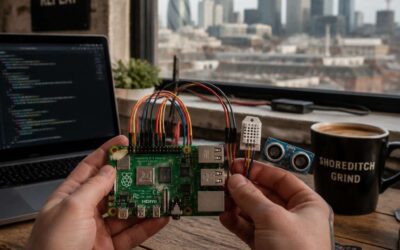
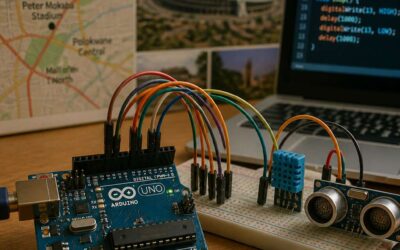
– DHT22 sensors for temperature and humidity readings
– BMP280 barometric pressure sensors for storm prediction
– Anemometers for wind speed and direction tracking
– Rain gauge tipping buckets for precipitation measurement
– LDR light sensors to log sunlight hours
These building blocks make up the backbone of most regional environmental projects. For a class project, learners might assemble a basic station that displays readings on a small LCD screen. More advanced groups integrate micro SD cards for long term data logging. The versatility of the Arduino Eastern Cape platform means a single kit can serve both introductory and advanced students. The collected data becomes a shared resource for the school or community, giving the project a purpose beyond the classroom walls.
Interactive Tourism Displays and Visitor Engagement
Tourism in the Eastern Cape relies on more than just scenery. Visitors want connection, not just a view. A small museum in Grahamstown proved this by building an interactive exhibit with Arduino Eastern Cape components. When a guest approaches a display case, a motion sensor triggers a local audio narrative. The system reads a different story based on which artifact the visitor stands near. The result is a self guided tour that costs a fraction of a commercial audio system.
The technology looks unassuming. A microcontroller hidden behind a wooden panel, a few ultrasonic sensors, and a small speaker. But the effect is immediate. Guests spend longer at each exhibit. They ask staff questions about the electronics, not just the history. The museum now offers a workshop where visitors assemble a simple version of the system to take home. This turns a static visit into a memorable, hands on experience.
Other projects follow the same logic in different settings.
– A bed and breakfast near the Wild Coast uses a PIR sensor to activate a welcome message and light sequence when guests enter their room.
– A local trail association installed Arduino Eastern Cape based signposts that display elevation data and trail difficulty on a small e paper screen.
– A craft market in Port Elizabeth uses a button based voting system for visitors to choose the “people’s choice” artisan of the month.
The real advantage is the hardware’s flexibility. One venue can start with a simple light activated display and later add touch sensors or a GSM module for remote updates. The barrier to entry remains low because the materials are standard electronics, not proprietary tourism tech.
There is a deeper layer to these installations. When a tourist sees a handmade device working reliably, it changes their perception of the region. It signals technical competence and creative thinking. A business owner in Jeffreys Bay mentioned that his interactive surf report display, which logs wave height via a pressure sensor, draws more foot traffic than his actual shop front. That is the quiet power of a distributed microcontroller network. It makes a space feel alive. The maintenance cost is a few rand in replacement sensors and occasional code tweaks, which a local hobbyist can handle. This keeps the project sustainable without a dedicated IT team.
Healthcare – Remote Patient Monitoring and Assistive Devices
A community health worker in Mthatha drives 40 kilometres between patient homes each day. A device built around Arduino Eastern Cape components can remove most of those trips. A pulse sensor, a GSM module, and a microcontroller relay heart rate data to a clinic tablet before the nurse leaves the office.
Local builders are producing assistive devices that work in the field. A Port Elizabeth workshop created a talking medication dispenser for a patient with low vision. It chimes at dosage time and announces the pill name. A separate team designed a fall detector that texts a relative via the cell network. The components cost less than a clinic’s weekly fuel bill.
Prototypes in circulation include:
- Blood pressure loggers for rural home visits
- Bed occupancy alarms for frail care facilities
- Motion activated night lights for elderly residents
These devices reach real patients. Arduino Eastern Cape supplies genuine medical support without imported hardware pricing.
Building Skills and Knowledge
Hands-On Workshops and Training Sessions
Somewhere in the Eastern Cape, someone is teaching themselves to code an Arduino with only YouTube videos for company. It works, but it is slow. Hands-on workshops change that entirely. They provide a shared space where confusion gets answered in real time, not days after a forum post.
For those involved with Arduino Eastern Cape, these training sessions form the heart of the community. Participants arrive with half-built projects, burnt-out pins and quiet frustration. They learn to read datasheets, identify faulty connections and calibrate sensors under the eye of an experienced mentor.
- Component selection and safe circuit building
- Reading electrical schematics
- Debugging code on real hardware
The real gain is quieter. People leave with fewer mistakes to make on their own, and they carry that competence back to their villages and towns. Each session strengthens a network of capable makers, and that steady growth keeps the movement alive.
University-Level Courses and Certifications
There is a more structured path emerging for those who want depth beyond self-taught tinkering. University-level courses and certifications across South Africa now treat Arduino Eastern Cape as a legitimate academic subject. These programmes cover embedded systems, C++ for microcontrollers, and the engineering principles behind hardware design.
A typical curriculum includes:
– Interfacing sensors and actuators with ATmega chips
– Writing efficient, memory-aware code
– Designing PCB layouts for real-world deployments
What sets these courses apart is assessment. You cannot bluff your way through a certification exam. You must prove that your prototype works, that your wiring is sound, and that your code runs reliably. I have watched graduates of these programmes move into roles that self-taught makers rarely reach. That rigor carries weight with employers. For someone who wants to turn tinkering into a profession, this formal route is worth examining.
Free Online Tutorials and Learning Platforms
Roughly 70% of self-taught makers in South Africa start with free online material, yet the Eastern Cape has unique challenges around connectivity and content relevance. I have seen beginners in Gqeberha struggle with tutorials built for overseas voltages and component availability.
Platforms like YouTube, Tinkercad, and the official Arduino project hub offer a starting point. Filter for videos using common local components such as the ATmega328P or ESP32. For Arduino Eastern Cape enthusiasts, free courses on Coursera and edX provide structured pathways without cost.
- Search YouTube for “Arduino for beginners”
- Use Wokwi for browser simulations
- Download the Arduino IDE and run built in examples
The strength of these resources is that you can fail cheaply. Burn an LED, miswire a sensor, and still learn. The learning curve is real, but the entry price is zero.
Mentorship Opportunities and Peer-to-Peer Learning
Learning Arduino Eastern Cape solo has limits. A mentor compresses months of trial and error into weeks. In Gqeberha and Makhanda, experienced makers open their workshops to newcomers on weekends, often for no charge. They show you which components are worth buying locally and which to import.
Peer learning works differently. Small groups meet to debug each other’s code and wiring. One person’s sensor fault becomes a lesson for everyone.
- Bring a broken project for group diagnosis
- Pair with someone learning a different board
- Share local supplier discoveries in the group chat
This mentorship culture across the Arduino Eastern Cape community matters because component failures happen often. Having someone who recognises the symptoms of a fried regulator saves hours. The informal networks that carry knowledge from one maker to another hold value that no tutorial can match.

0 Comments