Understanding the ESP32 Microcontroller
The ESP32 does not flinch. It holds its signal steady against Durban’s humid, salt laced air. This microcontroller brings dual cores, integrated radio, and enough flash memory to run serious applications.
I have seen it work through power dips and troublesome interference waves. It persists. The ESP32 Durban community expands because this chip converts simple sensors into connected systems directly.
Consider what it offers:
- Wi-Fi through 802.11 b/g/n
- Bluetooth 4.2 plus BLE
- Deep sleep current under five microamps
That final number is crucial. Battery driven devices can survive our rotating load shedding schedules!
The Growing IoT Ecosystem in Durban
Durban’s IoT ecosystem has a peculiar aroma of solder and sea salt. Every month, a mixed group of engineers and hobbyists gather to debug devices that refuse to behave. The scene has grown from tinkering into a genuine industrial force.
ESP32 Durban boards are everywhere, from municipal water sensors to informal trader payment tags.
- Smart bins that text when full
- Wave monitors that output raw data for surfers
- Load shedding timers that report optimistic uptime
What strikes me is the collaboration. No one hoards knowledge. A taxi driver once showed me his custom rig for tracking fuel theft, built on the same chip. That sums it up. It is chaotic, practical, and impossible to replicate elsewhere.
Sourcing ESP32 Components Locally in Durban
The ESP32 Durban community has grown faster than the local supply chain can keep up. Yet components are available in unexpected corners of the city. The challenge is knowing which shelves to check.
Independent electronics shops near the Greyville area stock development boards and modules. Their stock rotates weekly, so you might find a WROOM-32 one day and a S3 variant the next. Prices vary by up to thirty percent between stores, so a phone call saves you both fuel and frustration.
- DevKitC boards with USB to serial chips
- Jumper wire assortments and half size breadboards
- LiPo batteries and charging modules for portable builds
The advantage over online orders is immediate for ESP32 Durban builders. Walk in, inspect the solder joints, and leave with a working board. No waiting for international couriers or paying import markups on small quantities.
Building Your First ESP32 Project: A Durban Perspective
Somewhere in the humid dark of a Durban evening, your first ESP32 waits. The city hums with a low, broken electricity, load-shedding shadows cutting through the subtropical heat. It is an unforgiving environment, but one that rewards the patient.
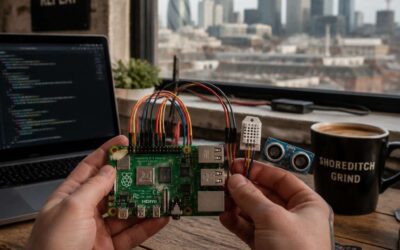
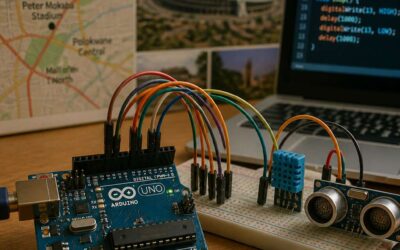
Assemble the basics before you begin. You will need the board, a breadboard, jumper wires, a micro-USB cable, and a sensor. That is all.
The pulse of this place is not gentle. Salt air crawls into solder joints, and the heat bleeds through plastic enclosures. Yet when your ESP32 Durban project finally blinks its first LED, green against the gloom, it feels less like a hobby and more like a séance. The code compiles. The port connects. Something in the dark answers you.
Connecting with Fellow ESP32 Developers in Durban
Durban’s humidity stresses your electronics, but its people support you. I learned that at a Tuesday hacknight, where the ESP32 Durban community gathered. We had engineers and hobbyists, all debugging GPIO pins. The conversation moved from bootloaders to street food. Two hours later, a stranger had fixed my I2C bus.
- Weekly problem-solving sessions
- A shared library of peripheral drivers
This network is not a club. It is a reflex. When your sensor fails at 11pm, someone answers. That’s rare. That’s worth having!

0 Comments