Understanding the IoT Hardware Landscape in East London
Key Considerations for Choosing Development Boards
The hardware landscape for IoT development boards East London is more nuanced than the global catalogues suggest. Local suppliers stock specific models, and shipping costs from Johannesburg or Cape Town can alter your project timeline significantly. Climate also plays a role, since coastal humidity affects certain components over extended periods. When selecting boards, you are really matching your operational constraints against what you can actually source.
Consider how your team will interact with the hardware.
- Check the availability of replacement boards and spare parts locally.
- Verify that the power supply matches municipal voltage stability.
- Confirm whether the board documentation supports the common development environments you use.
The most reliable choice is rarely the most advertised one. It is the board that someone in East London can repair, replace, or reconfigure without waiting weeks for international delivery. That practical reality shapes every successful deployment in this region.
The Role of Connectivity Options (Wi-Fi, LoRaWAN, NB-IoT)
Connectivity shapes what an IoT development board East London project can actually achieve. A board with only short range Wi-Fi becomes a liability when your deployment sits across a sprawling industrial site or behind thick concrete walls. The Eastern Cape is not a uniform environment, and neither should your radio choice be.
Evaluate the physical space between nodes. In dense urban pockets of East London, Wi-Fi handles routine sensor telemetry well. But for agriculture projects inland, or for tracking assets along the harbour, you need a different beast entirely.
Consider these options based on terrain and distance:
– LoRaWAN for multi kilometre links with minimal power draw.
– NB-IoT when you need guaranteed penetration through building materials and can rely on cellular infrastructure.
– Wi-Fi for high bandwidth bursts, but only where latency tolerances are generous and power is not a constraint.
The local reality is that LoRaWAN coverage in East London is spreading, but it is not ubiquitous. Batteries are often the true bottleneck. A board that burns through 200 mA during deep sleep is not an IoT device, it is a heater. Your choice of connectivity protocol will dictate the battery chemistry and the solar panel sizing, assuming you are not running grid power. For coastal deployments, the salt air corrodes antenna connectors, so plan for sealed enclosures and remote diagnostics.
In the end, the best board is the one that preserves power while keeping the link alive. That often means selecting a model that supports multiple radio modules, so you can swap a LoRaWAN chip for an NB-IoT module later without redesigning the entire PCB. The local supplier landscape for IoT development boards East London favours flexibility, because the connectivity picture here is still being written. Plan for the network to change under you.
Power Management and Battery Life for Local Deployments
Mains power in East London is intermittent. Load shedding schedules mean the grid cannot be trusted, so the IoT development boards East London projects use must justify every milliamp drawn from the battery. The voltage regulator, onboard LEDs, and UART bridge consume current even when the sensor sleeps. A board that idles at 80 mA will fail before the project proves itself.
When evaluating hardware for local deployments, scrutinize these details:
- deep sleep current, not just active draw
- power supply topology, since linear regulators waste voltage
- real-time clock wake-up capability, because wireless SoCs often need external interrupts
The hardware landscape rewards boards with efficient DC-DC converters and native low-power modes. Many local suppliers now stock solar-ready boards with battery management circuits, suited to the Eastern Cape’s sunlight. The power architecture matters more than processor speed. A board that draws too much in standby will not last through the night, let alone a week of overcast skies.
Top Board Choices for Prototyping in East London’s Tech Hub
Microcontroller-based Boards: Arduino and ESP32 Variants
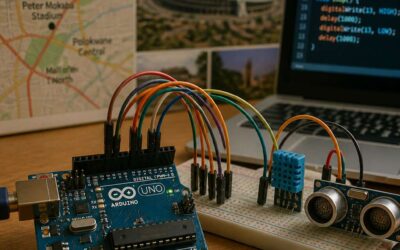
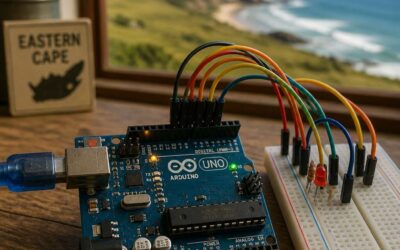
At the last East London Maker Faire, the most crowded table had no flashy drone. It held a plain breadboard with two microcontrollers. That is the reality of prototyping here. Arduino boards remain the starting point for many because their pinouts are forgiving and their libraries are battle tested. ESP32 variants bring dual cores and more RAM to the table, which matters when you run multiple sensors at once.
For a new project, I lean on a simple set:
– Arduino Nano for compact builds with basic logic
– ESP32 DevKitC for tasks that need extra memory
– ESP32-S3 Mini when size and speed both count
These choices save hours and keep the cost low while you test assumptions. Arduino offers stability. ESP32 offers headroom. Both have active communities in the Eastern Cape.
The IoT development boards East London engineers choose today will shape the products they ship tomorrow. Pick one that matches your team’s tolerance for complexity.
Single-Board Computers: Raspberry Pi and Its Applications
Raspberry Pi has become the quiet workhorse of East London’s prototyping scene. Unlike microcontrollers, it runs a full Linux operating system, which unlocks a different class of projects. For IoT development boards East London engineers often pair a Pi with a camera module for visual inspection or a touchscreen for local dashboards.
The board excels when you need to process data on device. Image recognition, logging to a database, or serving a web interface all happen without cloud dependency. The Raspberry Pi 5 with its PCIe slot even supports NVMe storage, which matters when you gather weeks of sensor data.
Common applications in local tech hubs include:
– Environmental monitoring stations that upload to a central server
– Retrofitting legacy factory equipment with network access
– Prototyping edge AI for sorting quality control
The Pi’s GPIO pins handle basic inputs, but its real value lives in the software stack. Python scripts, Docker containers, and Node-RED all run natively. That flexibility makes it a natural step up from an ESP32 when your prototype outgrows real-time constraints. For teams selecting IoT development boards East London, the Pi remains the fastest route to a functional proof of concept.
Specialized Boards for Industrial and Smart City Projects
East London’s industrial corridors and smart city pilots demand boards that withstand harsh conditions. The STM32 Nucleo series appears frequently in local machine monitoring rigs, for its CAN bus support and deterministic timing. Municipal projects tracking water or traffic lean on Pycom and Seeed LoRaWAN boards for long-range telemetry without draining power budgets.
Portenta H7 units keep showing up in prototype enclosures, and frankly, I get it. The dual-core design separates real-time control from a Linux processor, useful when one device manages a motor and a dashboard. Specialized IoT development boards East London teams choose are picked for survival in dusty factory bays before anything else.
A few dominate local workbenches:
- STM32H743 for industrial pulse counting
- M5Stack Core2 for quick UI prototypes
- nRF52840 for Bluetooth-heavy sensor nodes
These boards handle what a Pi cannot when Linux overhead becomes a liability.
Low-Power Boards for Remote Sensor Networks
East London’s prototype culture rewards restraint. Engineers choose boards based on how quickly a design moves from breadboard to field trial. Quiet favourites rotate through the city’s maker spaces.
Recurring picks from local developers:
- Seeed XIAO series for featherweight sensing nodes
- Heltec WiFi LoRa 32 for dual connectivity
- RAK WisBlock for modular deployments
For remote sensor networks across the Buffalo City Metro, current draw decides everything. Boards that sleep at microamps and wake only to transmit hold the advantage. The ESP32-C3 appears often for its reliable deep sleep states. Battery life here is measured in seasons, not days. I’ve watched projects stall because a board drained in a week!
IoT development boards East London engineers select today face erratic power and coastal humidity. The survivors share one trait: little demand, consistent delivery.
Sourcing and Procurement in East London
Local Distributors and Electronics Retailers
Sourcing IoT development boards East London asks for patience and local knowledge. Distributors in the city rarely carry deep inventory, so phoning ahead about incoming stock is essential. Electronics retailers, from small repair counters to industrial suppliers, let you inspect boards before parting with cash. That matters when you need to confirm a pin layout or a power rating on the spot.
A practical strategy involves cross-checking several channels. Call first, ask about warranty terms, and compare prices against imported alternatives. Local buying avoids shipping delays and customs paperwork, though you may pay a small premium.
Consider these procurement routes:
- Authorised resellers for established brands
- Specialist hobbyist stores with Arduino and ESP32 units
- Wholesale suppliers serving regional manufacturers
Each route has its own lead time. Retail shelf stock works for prototyping, while an authorised distributor offers consistency for larger runs. Build relationships with both, and your projects stay on schedule.
Online Marketplaces vs. Local Stockists
The cheapest board online is usually the most expensive one you will ever buy. Counterfeit ESP32 modules flood the marketplaces. For IoT development boards East London, a fake chip means wasted weeks. I have watched projects stall for a month over a single bad batch. Local stockists carry less inventory, but they carry the real thing! When a board fails, you walk it back to the counter and swap it on the spot.
Online wins on range and price. Local wins on verification and speed. That distinction matters more than the rand difference. The trade-off looks like this:
- Online: deep stock, low prices, but shipping delays and counterfeit components.
- Local: less stock, higher prices, but tested boards and immediate swaps.
Both channels serve a purpose. Bulk orders come from online suppliers, while critical boards come from local stockists. That split keeps IoT development boards East London projects moving without risking your deadline on a courier.
Import Regulations and Lead Times for UK-Based Projects
Ordering IoT development boards East London directs from the United Kingdom carries a customs layer that local suppliers never touch. The British electronics sector ships fast, but South African customs holds every parcel for inspection. A board leaving Heathrow on Monday often clears OR Tambo by Wednesday, then sits in a courier depot for another two days before reaching the Wild Coast. For UK-based projects, the real timeline leads through border control, not the supplier’s dispatch desk.
Import duties land at roughly 10% of the declared value, plus VAT, and the receiver carries that cost unless the seller agrees to Delivered Duty Paid. The harmonised system code determines the exact rate, and a mislabelled invoice can stall a consignment for a week. UK suppliers frequently underdeclare to keep prices competitive, which customs flags. Lead times run seven to twenty one days, so treat them as a range, not a commitment.
- Request the HS code from your UK supplier before payment to confirm the tariff class.
- Check whether the courier handles customs brokerage or whether you must appoint one.
- Track shipments through the courier’s own portal, as the SA Post Office is unreliable for imports.
Leveraging University and Maker Space Inventories
The back rooms of university engineering faculties and local maker spaces hold more IoT development boards East London than any retail shelf. Walter Sisulu University’s electronics lab keeps a rotating inventory of ESP32 modules and Raspberry Pi units. The Buffalo City maker community maintains a shared component library. Members trade unused boards instead of storing them indefinitely. This informal supply network matters when courier timelines stretch. A researcher who needs a LoRa-capable board for a river monitoring pilot can often borrow one overnight. The transaction costs are low, but access depends on relationships. You must introduce yourself, explain the project, and respect lending rules. Shared shelves typically hold:
- ESP32 and Arduino development modules
- Raspberry Pi 4 and Zero boards
- LoRaWAN shields and sensor arrays
East London’s maker space inventory system tracks every board that enters its doors, so the true local stock of IoT development boards East London exceeds any single supplier’s catalogue. This approach suits prototyping and feasibility studies. Production quantities still demand commercial suppliers.
Cost Comparison and Budgeting for Pilot Runs
Price tags for IoT development boards East London tell a curious story. The same ESP32 module that costs R185 at a local electronics retailer might appear at a university surplus sale for R60, complete with a sensor shield still in its anti-static bag. Yet the retailer offers something the surplus bin cannot: a warranty and a return policy. For pilot runs, the difference between these paths matters more than the initial savings.
Consider the procurement tiers available to a Buffalo City prototyping team working with IoT development boards East London:
- Single unit pricing from local stockists, which includes same-day collection and technical advice
- Bulk batches from Johannesburg distributors, with a 25% discount but a 7 to 10 day delivery window
- Direct imports from Shenzhen suppliers, half the unit cost but hostage to customs clearance timelines
Budgeting for a pilot run demands a clear-eyed view of these trade-offs. A project requiring six LoRa-enabled boards will spend roughly R4,200 locally, R3,150 through a bulk purchase, or R2,100 via direct import. But the local route secures the boards today, while the import route risks a six-week delay if the SARS inspection queue backs up.
The hidden cost in any pilot budget is the price of waiting. A researcher monitoring the Nahoon River estuary cannot pause a flood event for a courier. The pragmatic middle path involves pairing two locally sourced boards with four ordered in bulk, a hybrid approach that keeps the pilot moving while the remaining inventory arrives.
Ask any experienced engineer about procurement for IoT development boards East London and they will mention the R200 rule. If the cost of borrowing or renting a board exceeds R200 per week, just buy it outright. If it falls below that figure, the maker community’s shared shelving will likely carry what you need. This arithmetic keeps pilot budgets lean without sacrificing momentum.
Every pilot run deserves a procurement line item that accounts for the difference between urgency and economy. The numbers are not always obvious. A R60 surplus board with a missing jumper cap can cost two days of debugging time, while a R185 retail board works out of the box. For a three-month pilot, that two-day advantage is often worth the premium.
The final budget figure for any pilot using IoT development boards East London reflects a series of small choices about patience, risk, and relationships. Getting the arithmetic right means asking what a week of stalled development costs, then matching that against the delivery timelines of each supplier tier. The answer will guide every subsequent purchasing decision, from the first sensor to the final enclosure.
Community Support and Learning Resources
Meetups, Hackathons, and Workshops in East London
There is something magnetic about a room full of people wrestling with the same hardware frustrations. In East London, community support for IoT development boards East London has grown beyond forums and comment threads. Local meetups bring together hobbyists and engineers who share fixes for stubborn sensor glitches or power draw issues.
Hackathons here push you past your comfort zone. You might spend forty-eight hours prototyping a water quality monitor or a waste bin alert system. Workshops take a more patient pace, often led by veterans from nearby startups. The typical sessions cover:
- Soldering techniques for fragile pin headers
- Debugging over serial connections
- Selecting the right board for a specific use case
What strikes me most is the openness. Strangers lend spare components and argue about firmware optimisations without ego. That energy transforms a solitary build into a collective learning experience.
Online Forums and Local Experts
When a build fails at 2 a.m., I rarely expect a datasheet to save me. The answer usually sits in an online forum thread or in the memory of an engineer who has already burned the same pin. For IoT development boards East London, the digital conversation matters as much as the hardware itself.
Local experts populate these spaces with practical knowledge. They explain why a specific ESP32 variant behaves poorly near the docks, or how to extend battery life in a flood sensor. Their advice is direct and tested.
- Test firmware in a simulator before touching solder
- Search by chip version, not board name
- Request power draw logs, not opinions
The forums remain active because the people who answer are the same people you meet at component counters. That continuity builds trust across every project.
Educational Institutions and Their Open-Source Contributions
In the corridors of East London’s tech departments, a quieter tutelage unfolds. Educational institutions publish their open-source work, raw schematics and firmware patches alike, into shared repositories that outlive any single course. These archives carry the residue of many failed builds, which is precisely their value. I have found answers in a university commit history that no forum thread would ever surface.
- Search institutional repositories for your exact board revision
- Read their test scripts for environmental sensors before deploying near the estuaries
- Treat their error logs as field notes, not noise
Inside that open-source habit lies a practical edge. A student project that becomes a public reference design shortens the path for IoT development boards East London engineers adopt, and the margin for error narrows with each documented failure. The knowledge persists beyond the semester, embedded in code and notes that remain accessible to anyone asking the right questions.
Real-World Deployments and Case Studies
Smart Home Solutions in East London Residences
When you install IoT development boards East London, the results are rarely boring! A local estate agent fitted Raspberry Pi based controllers to manage geysers across six townhouses. He cut the electricity bill by 18% and earned the title “Geyser Whisperer” from his tenants.
Typical smart home deployments in Buffalo City residences include:
- Automated garden irrigation using soil moisture sensors
- Security gates triggered by LoRaWAN key fobs
- Lights that announce their own failure via Telegram
Each project relied on off the shelf boards and a tolerance for errors. One homeowner connected his ESP32 to the kettle, creating a machine that boils water before he wakes. His wife still ignores it.
Environmental Monitoring Across the Borough
In East London, environmental monitoring has quietly become a tangible pursuit. Researchers at a local marine sciences station near the Nahoon River mouth now employ IoT development boards East London to track coastal erosion in real time. The boards, sealed in waterproof enclosures, transmit subsurface temperature and turbidity readings every fifteen minutes. This data informs a public dashboard that residents consult before planning beach excursions.
The deployment required little more than a solar panel and a robust LoRaWAN gateway. For smaller civic projects, the approach remains equally direct:
– Air quality sensors on streetlights measure particulate matter from diesel traffic.
– River level monitors trigger SMS alerts when flood plains approach critical thresholds.
– Soil probes in community gardens report moisture content to a central municipal server.
Each node operates on a modest power budget, consuming under 50 milliamps during active transmission. The collected datasets have already influenced a proposal to reroute the city’s bus rapid transit corridor. It is a quiet, persistent infrastructure, powered by inexpensive hardware that anyone can repurpose. The borough gains foresight, and the devices ask for little in return.
Retail and Logistics IoT Implementations
A pallet tracker in an East London warehouse costs less than a pair of running shoes. That fact has reshaped how logistics firms in the city think about visibility. IoT development boards East London now sit inside cardboard boxes, on forklift masts, and in the cab of delivery trucks, reporting location and shock events over LoRaWAN.
Retailers have adopted the same hardware for different ends.
- Electronic shelf labels update prices from a central server.
- Queue monitors at checkout adjust staff rostering in real time.
- Locker systems notify customers when parcels arrive.
The boards are cheap enough to treat as expendable. The data they return is not.
Future Trends and Upcoming Board Releases
Half the charm of a development board is its unassuming nature. The humble pallet tracker has begotten a foundry in Hackney Wick that mounts them inside concrete moulds to log curing temperatures, because a failed pour costs more than a lost parcel. Across the river in Rotherhithe, a small brewery uses the same silicon to monitor fermentation: a corked flask with a LoRaWAN shield. The initial outlay was less than a single rejected batch of stout. That is the practical arithmetic driving IoT development boards East London.
The future is less about processor speed and more about the abilities these tools bring to the edge. Watch for these launches:
– LoRaWAN boards with integrated machine learning accelerators for on-device anomaly detection.
– Dual-band Wi-Fi 6 and Thread combos for dense residential mesh networks.
– Solar-powered variants with advanced power gating for permanent outdoor deployments.
The eager builder will soon have more choices for handling data before it ever touches the cloud, a trend that narrows the latency gap considerably. The upcoming release cycle points to more efficient code compilation and broader support for matter protocols. Local distributors are already fielding inquiries about the new low-power ESP32 revision. For the East London tinkerer, the move toward closed-loop control and localised inference means their next project could run for a year on two AA batteries, quietly reporting from the warehouse or the windowsill, without a second thought.

0 Comments